
Malta launches planning with automatic permit freeze

Prime Minister Robert Abela presented the reform alongside Planning Minister Jonathan Attard, who previously served as Minister for Justice.
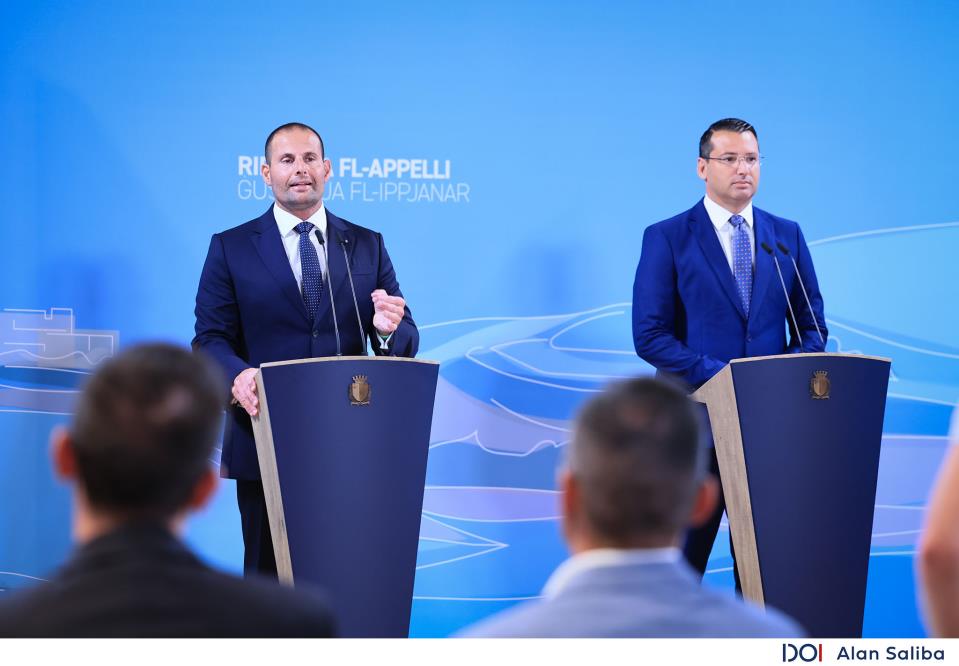
Image: The Malta Independent
The Maltese government launched a one-month public consultation on Tuesday, 21 July 2026, on a proposed reform to the planning appeals system that would automatically suspend any contested permit the moment an appeal is formally filed with the Planning Authority. Prime Minister Robert Abela presented the reform alongside Planning Minister Jonathan Attard, who previously served as Minister for Justice.
Abela said the current system "can lead to uncertainty for objectors and permit holders alike" and has "caused significant deficiencies and difficulties to people's quality of life on the Maltese islands, including instances where some innocent citizens effectively wasted their life savings on a plot that was fully developed during the appeals process before later being deemed illegal and having its permit revoked after its construction." Under the existing rules, developers may begin construction as soon as a permit is granted, even if an appeal has been filed.
The proposed reform would change that: once an appeal is formally submitted, construction works, demolition, excavations, changes of area use and other benefits arising from the permit would be immediately prohibited. The suspension would remain in force until the Environment and Planning Review Tribunal (EPRT), the independent body that hears planning appeals, issues a final decision or until the Court of Appeal rules if the case is escalated further.
The proposed timeline sets out clear procedural steps. A public notice would be issued three days after an appeal is submitted. The EPRT's first hearing must take place within 30 days.
The tribunal would then have six months to reach a final decision, with judicial assistance provided to help compile documents and evidence. If all parties agree, that six-month window may be extended, but the suspension of the permit would remain in place regardless. After the EPRT decides, parties have 20 days to escalate to the Court of Appeal.
The court would then have four months to deliver a ruling, either approving, revoking or sending the case back to the EPRT. It could apply for a two-month extension, giving it up to six months in total. Where multiple appeals are filed against the same planning application, the EPRT would consolidate them and hear them on the same day.
The proposal includes several safeguards. Only emergency interventions under strict legal parameters – such as those required for public safety – would be permitted while a permit is suspended. Under the Planning Act, those who press ahead with development while a permit is suspended would face enforcement penalties equivalent to those for illegal development, including enforcement notices, daily fines that vary by location and potential criminal proceedings.
The Cabinet of Ministers may, for cases of strategic importance and public interest, modify or disapply the suspension, subject to court oversight. Time spent under automatic suspension would not count against a permit's validity period. An electronic registry would notify the public when a permit is suspended, with permit-specific notices also distributed by email.
The reform would not apply retroactively. Only permits issued on or after the law's commencement date would fall under the new regime; pending appeals would continue under the existing rules. The proposal amends Chapter 551 of Maltese law, with legal consequences also affecting Chapter 552.
Compared with the shelved Bills 143 and 144 of August 2025, the new proposal increases the EPRT's decision window from five months to six and gives the Court of Appeal an additional month. The proposed €5,000 fine for vexatious appeals that featured in those earlier bills has been dropped from the current proposal. NGO representatives who had opposed Bills 143 and 144, describing them as "a developer's wishlist" and last summer's consultation on them as "farcical", had previously praised the automatic suspension mechanism specifically.
The First Reading of the legislation is to be tabled in Parliament on Tuesday; substantive debate is expected after the summer recess in September 2026. Attard said he has "no doubt" the new procedural deadlines will be upheld and expressed hope the reform will come into force before the end of 2026.
SOURCES
Related
Related articles
Planning authority approves il-fortizza microbrewery
The Planning Authority has approved restoration and adaptive-use works at il-Fortizza on Tower Road, Sliema.
Read more
Five hotel towers proposed along Sliema's seafront
Five hotel towers have been proposed along Sliema's seafront, adding to concerns over high-rise development on Malta's most densely built coastline.
Read more
14-storey Sliema hotels blocked on appeal
Environmental and Planning Review Tribunal blocks controversial hotel development featuring two towers with 158 rooms
Read more