
Malta population pressure as Swiss reject cap
Supporters argued Switzerland was becoming overcrowded and public services were buckling under strain.

Image: The Malta Independent
Swiss voters last Sunday rejected a referendum proposal to cap their country's population at 10 million by 2050, with the initiative–backed by the right-wing Swiss People's Party–defeated by roughly 55% to 45%. Supporters argued Switzerland was becoming overcrowded and public services were buckling under strain. Opponents warned the cap would damage economic growth, restrict access to foreign labour and jeopardize Switzerland's relationship with the EU.
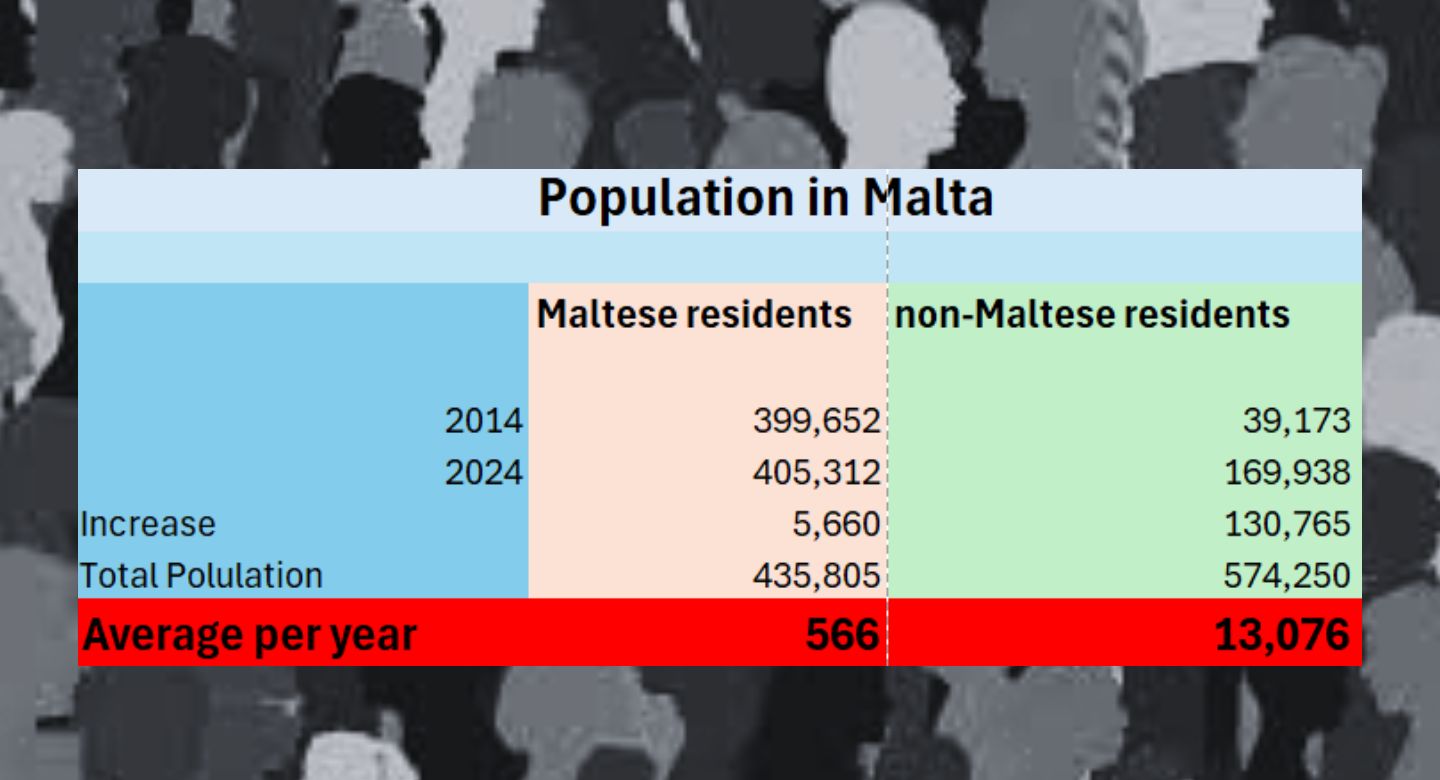
The contrast with Malta is striking. Switzerland covers more than 41,000 square kilometres with a population of around 9.1 million–roughly 208 persons per square kilometre. Malta has nearly 600,000 people within 316 square kilometres, giving it a density of approximately 1,716 persons per square kilometre, among the world's highest.
There is irony in the comparison. In the 1990s and early 2000s, Labour under Alfred Sant promoted a 'Switzerland of the Mediterranean' model–close ties to Europe without full EU membership–as an alternative to the Nationalist Party's EU accession policy under Eddie Fenech Adami. That model was envisioned as prosperous and self-contained.
The Switzerland voting last Sunday faced different pressures, wrestling with the effects of growth. Malta wrestles with the same pressures at far greater intensity. Car parks in Sliema fill to capacity on summer afternoons.
Traffic on the Central Link backs up during evening rush hour. Tourism adds cumulative pressure on top of a resident population that an article projection–without a cited primary source–suggests may approach 800,000 by 2040. Malta's population boom was policy, not accident.
Successive Labour administrations–first under Joseph Muscat, then under Robert Abela–built an economic model around labour importation. The economy weathered the Covid-19 pandemic better than many European counterparts, employment reached record levels and public finances held up comparatively well. Restaurants, buses, care homes, construction sites, food delivery operations and hotels remain heavily dependent on foreign workers.
Finance Minister Clyde Caruana has repeatedly warned that Malta's demographic trajectory raises serious questions about sustainability and quality of life. The columnist argues that neither major party is engaging honestly with those concerns: Labour has shown reluctance to acknowledge the downsides of the model it built, while the Nationalist Party has criticised the consequences without setting out how Malta could maintain growth while reducing dependence on foreign labour.
Malta still has to determine how many people it can live with before the strain becomes too much to bear. That conversation is long overdue.
SOURCES
Related
Related articles
Swiss cap vote highlights Malta density crisis
Swiss voters rejected a population cap on 15 June 2026. Malta, eight times denser and growing three times faster, has no long-term population strategy.
Read more
Gozo power outage leaves residents without electricity for 26 hours
Parts of Gozo lost electricity for up to 26 hours after two major faults hit Enemalta's high-voltage network.
Read more
PM announces infrastructure, education funds
Abela commits to new Malta-Gozo connection project and comprehensive school modernisation programme across the islands.
Read more