
Malta Resuscitation Council calls for compulsory CPR
Founded in 2004, the MRC is a voluntary organisation operating under the European Resuscitation Council.
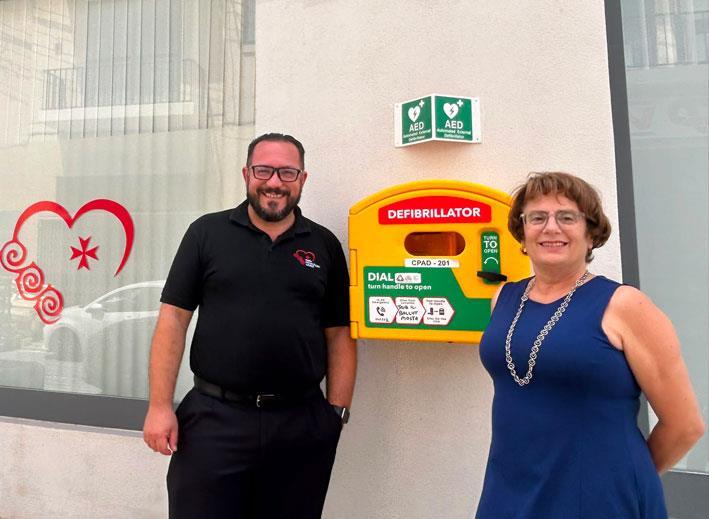
Image: The Malta Independent
The Malta Resuscitation Council (MRC) is calling for CPR to be made a compulsory part of Malta's national school curriculum, arguing that the current patchwork of voluntary uptake leaves too many students without training that could save a life. Founded in 2004, the MRC is a voluntary organisation operating under the European Resuscitation Council. It runs courses in advanced life support, trauma, neonatal, paediatric and instructor resuscitation for healthcare professionals.
Its chairperson, Dr Tanya Esposito and vice-chairperson, Dr Marius Caruana, have been central to a long-running collaboration with Malta's Education Department through which teachers are trained to deliver basic life support lessons, a programme that has since expanded to include paediatric CPR. Around 3,000 students a year currently complete basic life support instruction, a figure the MRC says falls far short of what universal, mandatory training would achieve.
CPR is not part of Malta's national curriculum; uptake depends on individual head teachers deciding it is worthwhile. "If it was on the national curriculum, it would be enforced," Esposito said. "At the moment, it depends on whether the head of the school thinks it's worthwhile."
Caruana made the case in stark terms. "If we don't do that, for every minute that passes without doing anything, we are reducing the chance of getting that person back by 10%," he said. He cited the internationally recognised chain of survival, a four-step sequence from recognising collapse to advanced medical care, noting that two of its four links depend on bystanders rather than healthcare professionals.
Caruana pointed to northern European countries that have embedded CPR in their school curricula as evidence that the approach works. "We know very well that in cases of cardiac arrest, time is life," he said. "Statistics show that northern countries which have introduced this in their curriculum have much higher cardiac arrest survival. People don't freeze. They don't have any inhibition. They just act."
Primary school children are already being taught through MRC-linked initiatives to recognise when someone is not breathing and to call 112. Discussions between the MRC and the Education Department on ensuring every middle-school student receives CPR training began several years ago. The MRC's ambition extends beyond schools.
Esposito and Caruana want CPR taught repeatedly throughout life, including as part of the driving licence process and workplace health and safety programmes. The MRC has begun discussions with relevant stakeholders on incorporating CPR into the driving licence process, though Esposito acknowledged that legislation, sufficient instructors and multi-stakeholder agreement would be required. "We have to move away from this idea that this is something for doctors and nurses," Caruana said.
"Helping another person in need is part of your civic duty. This needs to be taught, and it's a part of the education as much as the ABC that we learn." One barrier to bystander action is fear of causing harm.
Esposito identified three overlapping concerns. "I think it's all three. It is the fear of, 'what if I do something wrong and I make it worse?' But in truth, the patient has already died – it cannot be worse than that."
Malta has legislation protecting people who attempt to assist someone in good faith, a Good Samaritan provision, but Esposito said many members of the public remain unaware it exists. Even partial intervention helps, she added. "Even if you don't give breaths, at least you do the chest compressions. Chest compressions on their own will get some blood going to the brain, will help to make sure that person survives and goes home to their family, because that's what this is all about."
The MRC also aims to ensure that all automated external defibrillators in Malta are registered and publicly accessible. Separately, it is working with the European Resuscitation Council to establish a support network for cardiac arrest survivors, relatives and bystanders who performed CPR, addressing the psychological impact of the experience. "The trauma actually starts afterwards," Caruana said.
The MRC says it does not seek to replace organisations providing general first-aid training, such as the Malta Red Cross, but to complement them with CPR taught to European standards. Caruana noted a recurring pattern in public debate. "Every single time there is a tragedy, we talk a lot about it, then a couple of weeks pass, and it just fizzles away. We are at a crossroads here, and we need to act."
Esposito was direct about what she wants to see next: AEDs registered and available and CPR on the national curriculum.
SOURCES
Related
Related articles
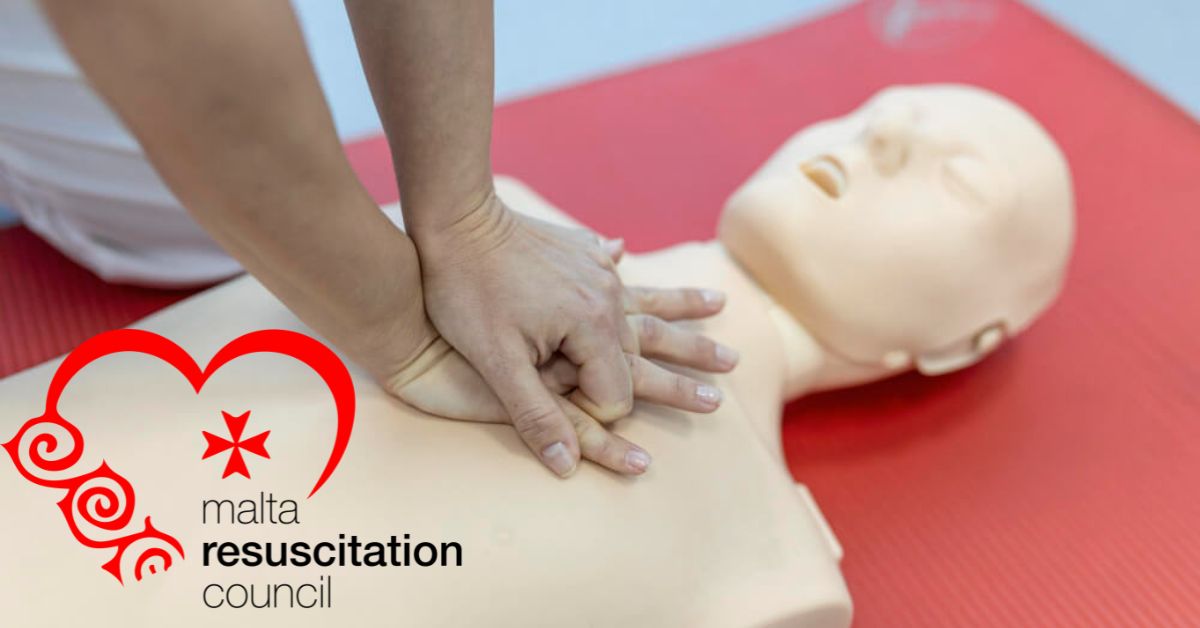
Malta Resuscitation Council pushes CPR into schools
The Malta Resuscitation Council is calling on the government to embed CPR training in Malta's National Curriculum.
Read more
Dyslexia experts demand end to fail-twice rule
Dyslexia specialists are demanding an end to Malta's fail-twice university rule, arguing it unfairly penalises students with learning difficulties.
Read more
MUT wants AI in schools, warns against overuse
The Malta Union of Teachers wants AI added to the compulsory curriculum, but says schools must avoid over-reliance on digital tools, especially in early years.
Read more