
Swiss cap vote highlights Malta density crisis

Swiss voters rejected a population cap on 15 June 2026. Malta, eight times denser and growing three times faster, has no long-term population strategy.
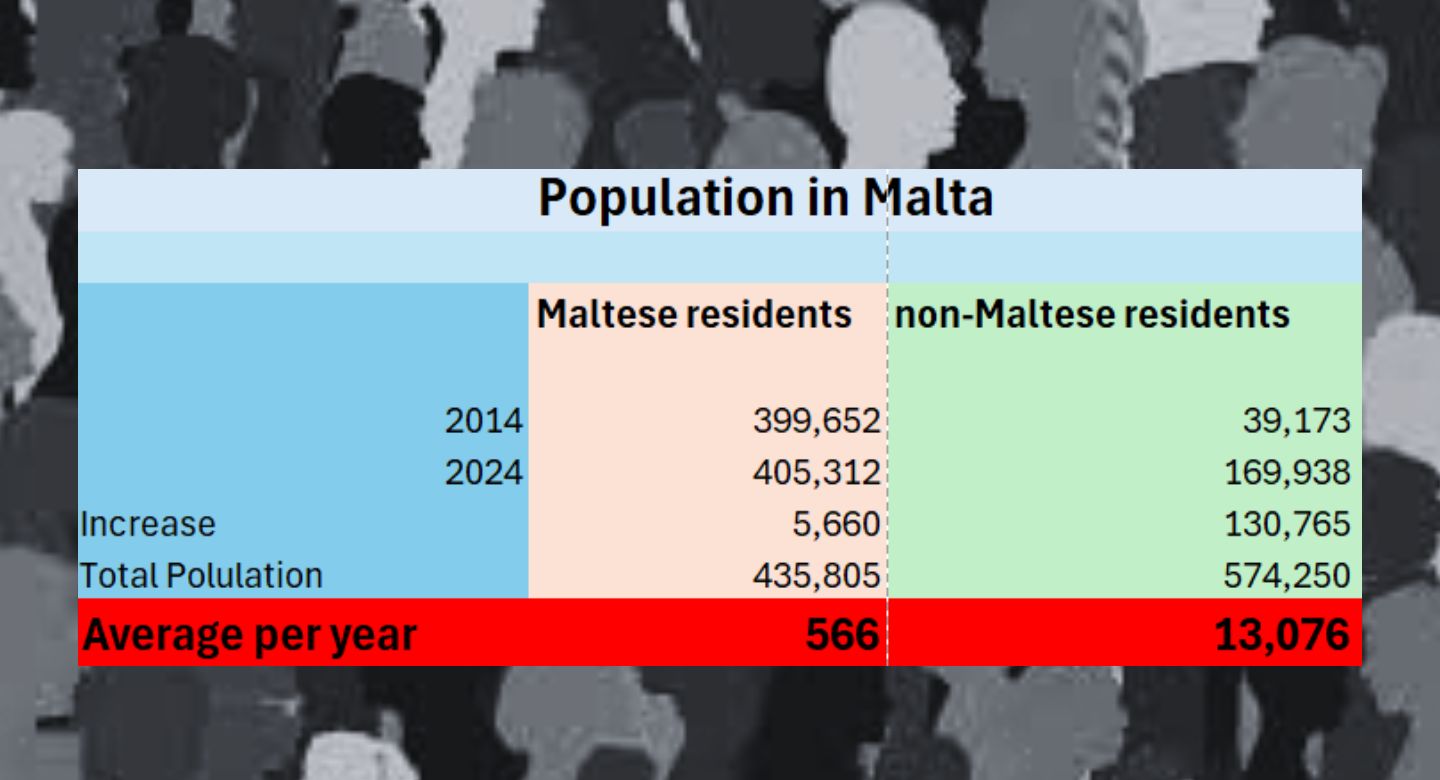
Image: The Shift News
Swiss voters rejected the 'Sustainability Initiative' on Sunday 15 June 2026, with 54.8% voting against a proposal that would have capped Switzerland's population at 10 million by 2050. The Swiss Federal Statistical Office put the country's population at just over 9.1 million at the end of 2025, spread across 41,285 square kilometres at a density of roughly 220 people per square kilometre.
Over the past decade, population grew by approximately 790,000 people, a rate of around 10%. The Swiss figures look different alongside Malta's. National Statistics Office data show Malta's population grew from approximately 440,000 residents in 2014 to around 574,000 today: an increase of more than 130,000 people or roughly 30% in a decade – three times Switzerland's rate over the same period.
Malta's territory covers just 316 square kilometres and its population density now exceeds 1,800 people per square kilometre, placing it among the highest in Europe. Switzerland was debating whether to cap growth at a density eight times lower than Malta's current reality, across a land area more than 130 times larger. Both countries have seen growth driven primarily by migration, but the policy levers available to each differ considerably.
Switzerland participates in free movement through bilateral agreements with the EU rather than as a member state, which gave it the formal flexibility to put a restrictive proposal to a popular vote, even if voters ultimately rejected it. Membership of the EU means Malta has no power to impose quotas on citizens arriving from other member states.
Where it does have discretion is over policies governing third-country nationals and the setting of labour market requirements. The Malta Fiscal Advisory Council has described Malta's growth model as unsustainable. That model has relied heavily on expanding employment in labour-intensive sectors: construction, tourism, hospitality, transport and care services.
Population policy, infrastructure planning and long-term sustainability all featured in Malta's 2026 general election campaign, with every party addressing these questions. Despite that, as of 15 June 2026 the Maltese government had not introduced measures aimed at significantly curbing the inflow of third-country nationals. Nor, the outlet reported, is there a publicly available long-term government strategy setting out expected population development or the sustainable carrying capacity of Malta's housing, infrastructure and environment.
Switzerland debated and then voted on, how many people its land and services can reasonably support. Malta has not yet produced a comparable strategic document.
SOURCES
Related
Related articles

Malta population pressure as Swiss reject cap
Supporters argued Switzerland was becoming overcrowded and public services were buckling under strain.
Read more
Malta launches planning with automatic permit freeze
Prime Minister Robert Abela presented the reform alongside Planning Minister Jonathan Attard, who previously served as Minister for Justice.
Read more
Gozo power outage leaves residents without electricity for 26 hours
Parts of Gozo lost electricity for up to 26 hours after two major faults hit Enemalta's high-voltage network.
Read more