
Homework reform under scrutiny over AI-ERA gap

Malta's homework reform shifts towards quality, but teachers warn AI-assisted submissions still leave core assessment gaps unresolved.
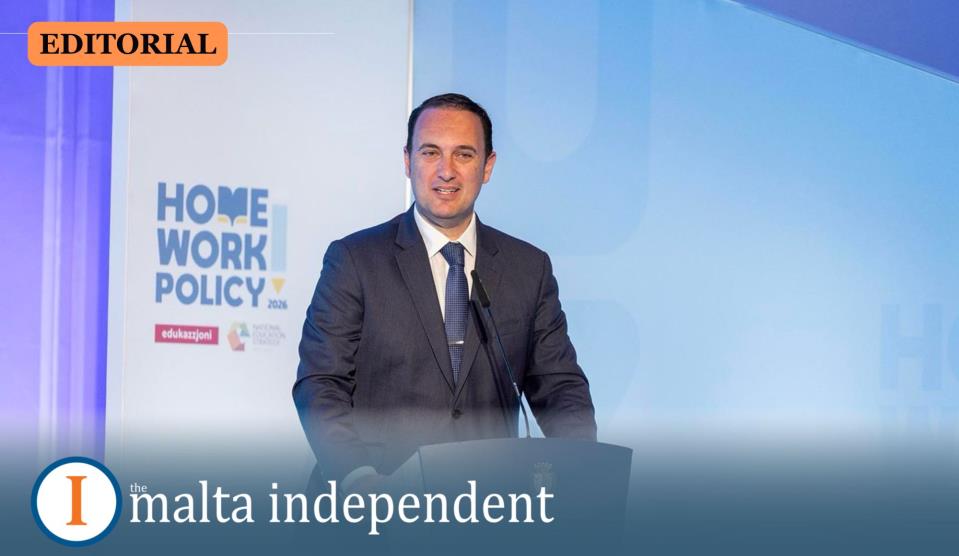
Image: The Malta Independent
Malta introduced a National Homework Policy on 5 May 2026, directing schools to prioritise quality over volume in assigned work and citing student wellbeing as a driver. The policy arrives as teachers are reporting a specific problem it does not solve: AI tools can generate polished academic work in seconds, making it impossible for educators to gauge what a student actually understands from a submitted assignment. Reducing the number of assignments does not change that calculation.
More reliable verification happens inside the school. Upgraded in-class assessments, monitored assignments and one-on-one oral examinations place the student before the examiner without an AI-enabled screen as an intermediary. The new policy focuses on workload reduction; teachers would need a parallel shift towards these in-school methods to close the assessment gap the policy leaves open.
Educators have reported a widening gap between secondary, post-secondary and tertiary stages, with students struggling to meet the higher expectations of each transition. Employers, too, have reported difficulty integrating younger workers into roles demanding sustained effort. Whether reduced homework contributes to either problem is not established and the policy does not cite evidence that cutting volume will improve learning outcomes.
The central risk is treating "less" and "better" as interchangeable without evidence that outcomes improve. A lighter homework load may ease pressure, but it does not by itself prove stronger learning, better progression between education stages or improved readiness for work. Unless the reform is paired with robust in-school assessment that can verify individual understanding, the system may become easier to manage while becoming less rigorous in practice. The long-term cost would not fall on students alone; it would be carried by employers, institutions and communities that depend on well-prepared graduates.
SOURCES
Related
Related articles
Farrugia's 13-year speakership under scrutiny
His tenure drew sharply divided assessments, most persistently over rulings in which his conclusions diverged from findings made by the Standards Commissioner.
Read more
Malta Chamber calls for traffic reform with 10-point plan
The Chamber argued that disincentives must accompany positive incentives if private car dependency is to fall.
Read more
Malta AI model improves galaxy classification
A University of Malta AI model improves radio galaxy classification; the paper has been submitted to Astronomy and Computing and awaits peer review.
Read more