
Malta disability proposals call for whole-family support
 By Admin
A Sunday inclusion discussion in Malta surfaced whole-family disability support proposals – early school screening, Individual Support Plans and autism-friendly hours in government departments.
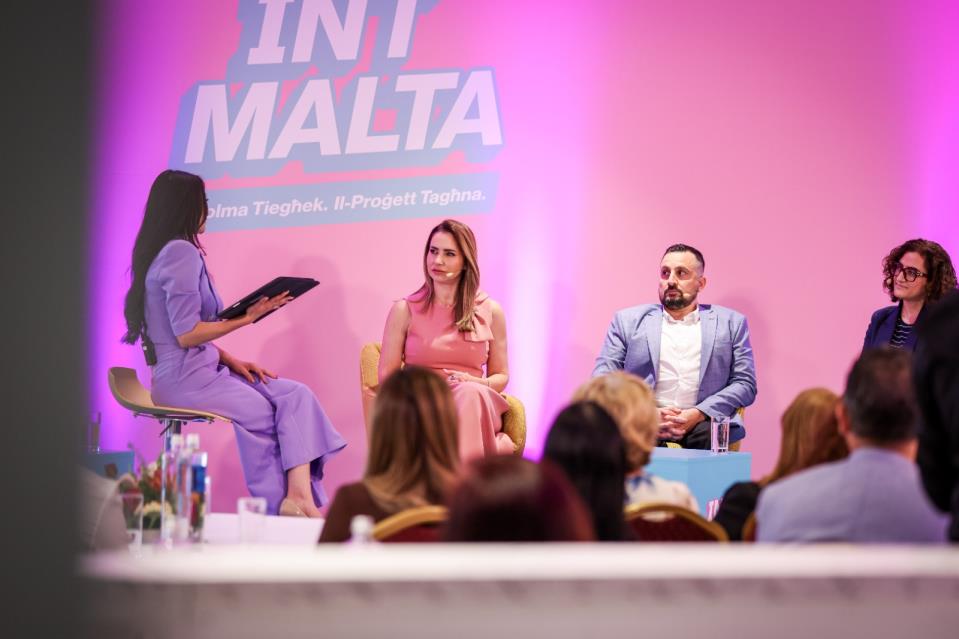
Image: The Malta Independent
Dr Lydia Abela, wife of Prime Minister Robert Abela, spoke on Sunday morning at a discussion on disability, inclusion and quality of life in Malta, arguing that disability policy should shape education, health and public services rather than operate as a standalone area of government. Speaking at the event, she said that every part of public life needs to reflect the needs of people with disability from the outset.
"When we help a person with disability we are not helping only them, we are helping an entire family," she said. Abela pointed to several proposals in the 'Int Malta' manifesto – an electoral document published by her husband's Labour Party – as examples of the direction she supports. These include early screening in schools for conditions such as dyslexia, dyspraxia and dyscalculia (difficulties with reading, coordination and maths respectively) for children aged five to seven.
The manifesto also proposes Individual Support Plans for people with disability. These would be drawn up jointly by families and professionals and designed to provide personalised support throughout a person's life. Other proposals include autism-friendly hours in government departments, calm rooms in public spaces and improved emergency services for autistic people at Mater Dei Hospital.
The 'Int Malta' manifesto is an electoral document; whether its proposals have been formally adopted as government policy has not been confirmed. Oliver Scicluna, chief executive of Aġenzija Sapport – the government agency that supports people with disability and their families – also spoke at the event. He pointed to progress in disability services and legislation since 2013 and stressed that policy should be built around the real experiences of the people it affects, with independence as a central goal.
Several other contributors added personal and professional perspectives to the discussion. Dr Olivia Galea Seychell, a mother of a child with autism, raised issues including communication, personal autonomy and mental health support for families. She also called for greater recognition that people express themselves in different ways.
Maria Formosa spoke about the work of Dar Bjorn and the difference that community support makes in practice. Wendy McKay argued that funding for therapies is a direct investment in the potential of neurodivergent children – that is, children whose brains work differently from what is considered typical, including those with autism or ADHD. Marika Tonna shared her family's experience following her son Kurt's serious accident, describing the importance of timely help and services that allow families to live with dignity.
Doreen Falzon also contributed to the discussion.
SOURCES
Related
Related articles
Malta Resuscitation Council calls for compulsory CPR
Founded in 2004, the MRC is a voluntary organisation operating under the European Resuscitation Council.
Read more
Malta Chamber calls for traffic reform with 10-point plan
The Chamber argued that disincentives must accompany positive incentives if private car dependency is to fall.
Read more
Malta third from bottom in EU research spending
Eurostat figures show Malta allocated €73.70 per person to research and development in 2025, placing it third from bottom in the EU.
Read more