
Malta elects record number of women outright

Malta elected a record number of women outright in 2026, raising questions over whether the gender-corrective quota mechanism is still needed.
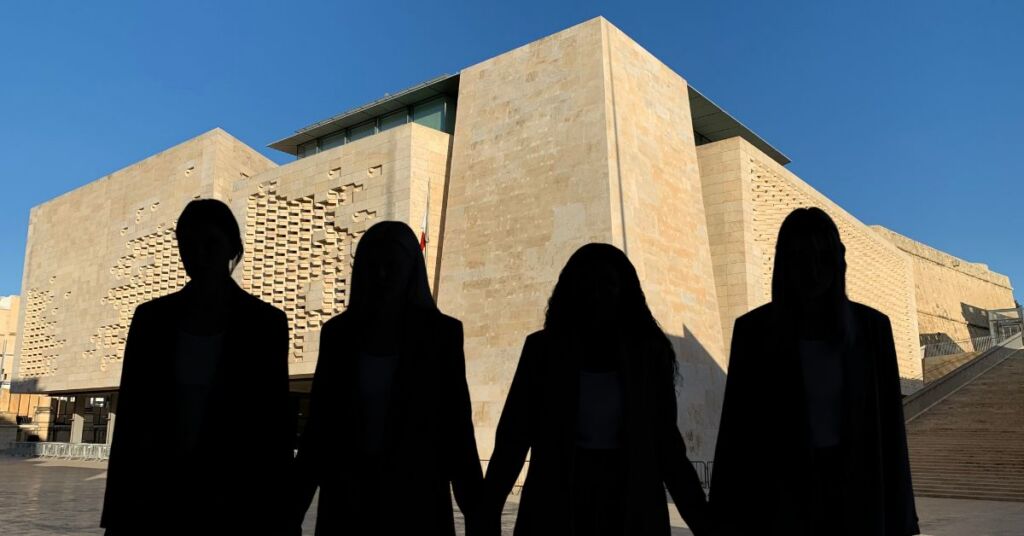
Image: Lovin Malta
Ten women held seats in Malta's House of Representatives at the close of the 2026 general election count – before casual elections and the gender-corrective quota mechanism were applied – the highest number ever recorded at that stage. Nine of the ten won district seats outright. The tenth, Janice Abela Chetcuti, entered through the older proportionality mechanism, a constitutional adjustment that tops up whichever party received more votes than its seat share reflects.
That mechanism is party-driven, not gender-driven and it has seated a woman only twice before in the available records: Claudette Buttigieg and Paula Mifsud Bonnici in 2013. The count-stage tallies across the past six general elections – district wins plus any proportionality seats, before casual elections and quota corrections – trace an uneven line: five women in 2003, six in 2008, seven in 2013, eight in 2017, four in 2022, ten in 2026.
District wins followed a similar pattern: five, six, five, eight, four, nine. Proportionality seats went to women only in 2013 (two seats) and 2026 (one seat); in 2003, 2008, 2017 and 2022, no woman entered through that route. The sharp drop in 2022 preceded the 2026 figure; the proportionality channel's contribution was minimal in both years.
Three of the nine 2026 district winners arrived in Parliament a different way four years ago. Eve Borg Bonello and Alicia Bugeja Said entered the House for the first time through the 2022 gender quota. Paula Mifsud Bonnici had previously served as a Nationalist MP between 2013 and 2017, lost her seat and came back through the same quota in 2022.
In 2026, all three won district seats outright – Borg Bonello reaching the quota threshold in her district, the other two taking the last available seat in theirs. Around one-third of this year's district winners first sat in Parliament because the quota put them there. The 2022 quota added twelve women to the House – six per party – lifting female representation to roughly 28% of members, still short of the 40% target written into law.
The quota has been applied in one previous election, 2022, making 2026 the first occasion on which its downstream effects on district results can be observed. The quota's legal status is being contested in court; the article does not name the parties, case number or court involved. In 2022, casual elections – triggered when a candidate wins two districts and must surrender one, with the vacated seat going to the next candidate in line – raised the pre-quota count-stage figure from four women to ten, equalling 2026's opening tally.
In 2026, casual elections had not yet been held at the time of writing and the article does not identify any that have been scheduled; the final women's total will depend on their outcome. Miriam Dalli was the only woman to top her district outright in 2026. No woman topped any district in 2022.
Across the six elections in the series, women topped a district twice in 2003, twice in 2008, then once each in 2013 and 2017, not at all in 2022 and once this year. 2% in 2026, with most of that growth recorded before the quota law existed – by 2017, about one in five candidates was a woman without any legal requirement to achieve it.
Under Malta's single transferable vote system, women's district wins tend to arrive late in the count, on transfers and marginal positions decided by a few hundred votes, rather than on early first-count returns dominated by men. That pattern holds across every election in the series. Nine district wins is a record for the count stage; it is also, in seven of the nine cases, a last-seat finish.
SOURCES
Related
Related articles

Borg: PM out of touch with Malta's financial reality
Borg pointed to three groups whose concerns he said bore no relation to boat ownership.
Read more
Malta's 15th parliament to open saturday in record time
The 14th legislature, by comparison, opened on 7 May 2022, six weeks after polls closed on 26 March that year.
Read more
113 kg of suspected cocaine seized at Malta Freeport
Customs officials identified the container as suspicious through risk-based targeting during routine screening.
Read more