
Quarry operators seek up to 83% tariff rise

Quarry operators want dumping fees raised from €12 to €20–€22 per tonne. Weeks of talks between the industry and government have yet to produce a resolution.
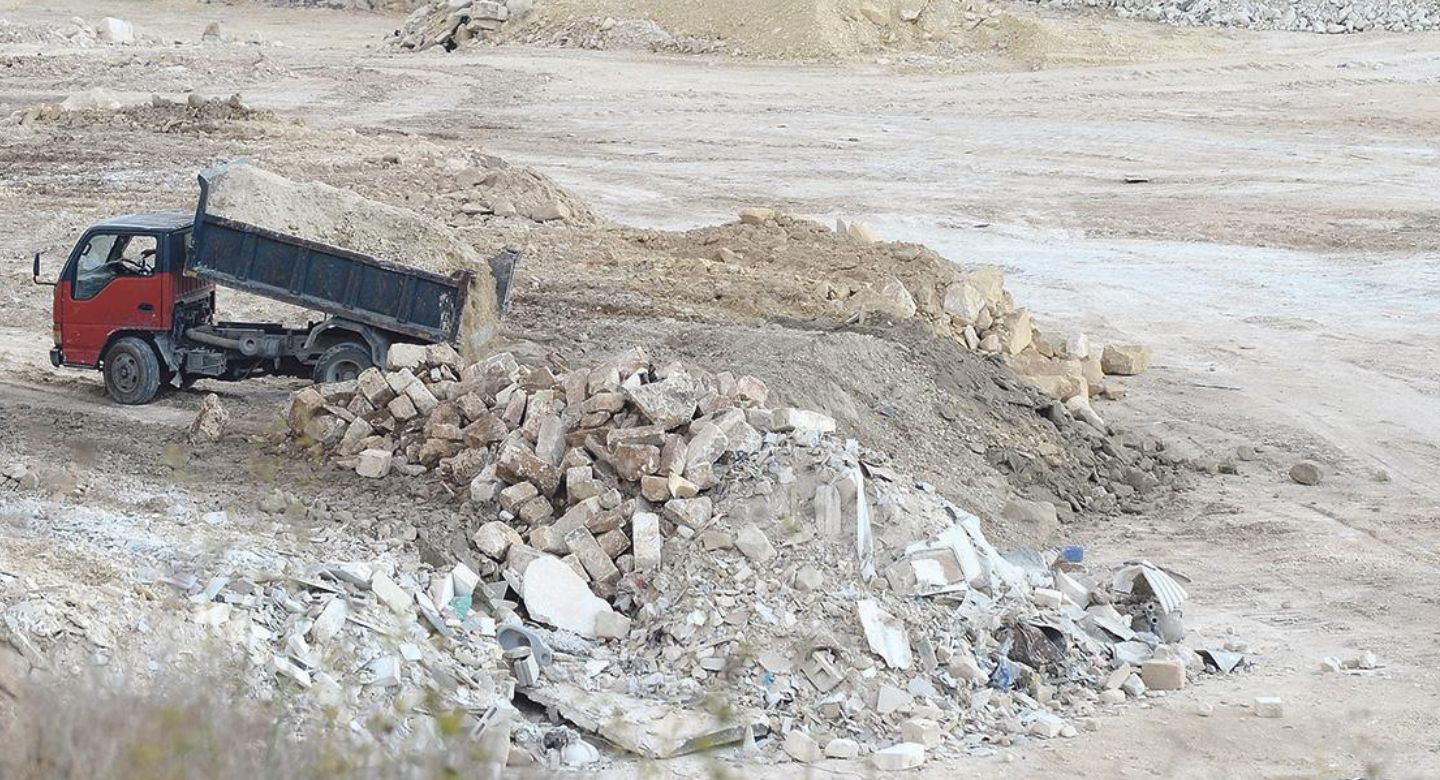
Image: The Shift News
A stand-off over construction and demolition waste disposal costs is threatening to slow building activity across Malta, with quarry operators pushing to raise dumping tariffs by as much as 83% and talks with the government deadlocked after several weeks. Quarry operators are seeking to lift the long-standing benchmark rate from €12 per tonne to between €20 and €22 per tonne.
Several quarries that previously accepted excavation and demolition material from third parties have already begun restricting or refusing incoming waste from external developers, while continuing to process material from their own affiliated construction projects. The construction sector depends on roughly six quarry operators for this service, leaving developers with little room to manoeuvre. The practical consequences are already being felt.
Some projects have slowed down; others have been postponed entirely. The Malta Developers Association confirmed that negotiations with the government have been running for weeks without a breakthrough. "We are trying to hold discussions with the government to move forward, but no conclusion has yet been reached," an MDA spokesperson said.
The spokesperson added that successive administrations had relied on temporary solutions instead of investing in dedicated long-term waste management infrastructure, leaving the sector without a durable disposal framework. The financial stakes for individual projects are significant. Under the current €12-per-tonne rate, a development that excavates 10,000 tonnes of waste is looking at disposal bills of roughly €120,000.
Should the proposed €20-per-tonne floor take effect, that same project would owe €200,000 – an €80,000 jump. For larger developments involving tens of thousands of tonnes, the added exposure runs into the hundreds of thousands of euro. Industry insiders warned that developers are unlikely to absorb those costs and would instead pass them on to buyers through higher property prices, on top of rising labour and materials bills already squeezing margins.
This is not the first time the sector has reached this point. A similar dispute in 2019 and 2020 threatened to bring construction activity to a halt before the government stepped in, securing agreements that set the current €12-per-tonne benchmark and preventing a wider shutdown. Anonymous sources familiar with the discussions alleged that ministers and senior officials were aware the dispute was brewing during the recent electoral campaign but kept it out of the public domain while back-channel talks continued.
The government had not issued a public statement on the negotiations at the time of publication.
SOURCES
Related
Related articles
Quarries restrict c&d waste in tariff standoff
Malta's quarry operators are restricting construction waste access in a tariff standoff, seeking €20–€22 per tonne against the current €12 benchmark.
Read more
PN pitches mortgage interest rebate for buyers
PN says it would refund half of first-time buyers' mortgage interest for ten years and widen the property deposit grant.
Read more
State to pay €272,000 in Sliema rent-law case
Malta's constitutional court has ordered the State to pay €272,000 to a Sliema family, ruling the island's rent-protection laws breached their property rights.
Read more