
MGRM co-chair on Malta's LGBTIQ equality journey
MGRM was founded in 2001 and has grown well beyond its activist origins.
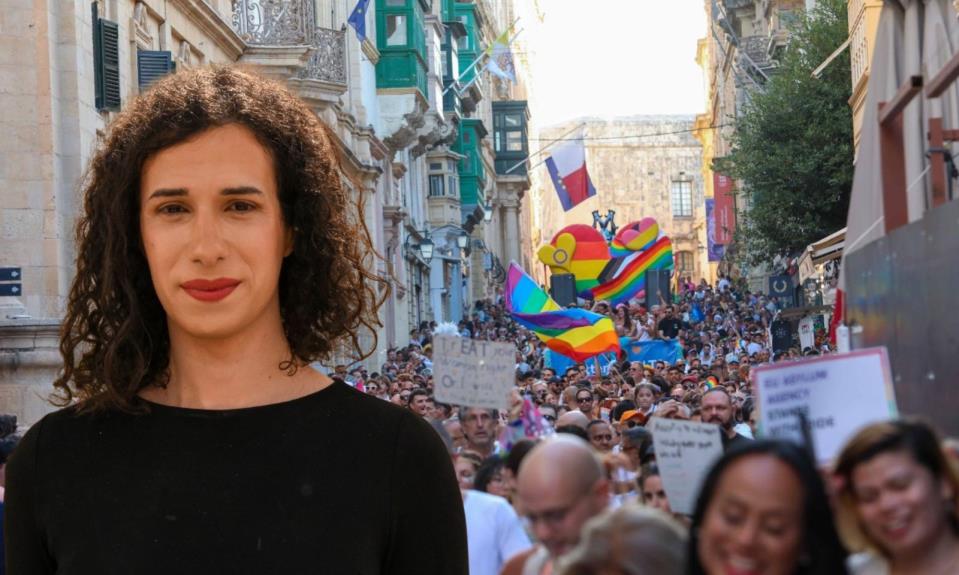
Image: The Malta Independent
Amanda Cossai, co-chair of the Malta Gay Rights Movement (MGRM) and a transgender woman, spoke to The Malta Independent on Sunday about Pride, legislative progress and what she sees as the unfinished work of LGBTIQ equality in Malta. MGRM was founded in 2001 and has grown well beyond its activist origins. Cossai joined in 2017, motivated by a desire to give back after benefiting from community support.
"We still do our activism part, but it's become just one portion of what we do," she said. The organisation now offers counselling, social work, therapy and a residential shelter alongside its advocacy and legislative campaigning. For Cossai, Pride serves three distinct purposes: an advocacy platform for legal and policy reform, a safe community space for LGBTIQ people and a celebration of progress already made.
She stressed its particular importance for young people and those rejected by family or friends. She is candid about her own experience. She faces harassment based on her feminine appearance and carries the additional concern that being identified as transgender could bring further discrimination.
"While we are still perceived as being different, then we're not treated equally," she said. On the legislative front, Cossai identifies the long-awaited Equality Act as the most significant remaining gap. She argues that, under current Maltese legislation, businesses and service providers can still legally refuse service on the basis of sexual orientation or gender identity and that the Equality Act would close that gap by prohibiting such discrimination in the provision of goods and services.
She also raised concerns about a lack of transparency in the policies and procedures used to assess LGBTIQ asylum seekers' claims based on sexual orientation and gender identity. Cossai described LGBTIQ people becoming increasingly visible in the latter half of the 2010s, which made it easier to find support networks and community events. She contrasted that decade with the 1990s and early 2000s, when LGBTIQ people and transgender people especially, were largely absent from public life or present only as objects of ridicule.
She credits Malta's wave of LGBTIQ legislative reforms as the single biggest turning point. "It was legislation that led to people becoming more accepting," she said, describing Malta as a country where legal change preceded and drove wider social acceptance rather than the other way around. She credited the Labour government for delivering on its commitment to expand LGBTIQ rights.
Increased visibility has brought complications, however. Cossai describes it as a double-edged sword: the community is more exposed to organised opposition and much of the hostility now affecting Malta is driven by narratives originating in the United States and spreading through social media. Malta recently fell from first to second place in the ILGA-Europe Rainbow Index.
Cossai said the drop should not be read as a setback. The index measures government protections rather than social acceptance, she noted and the shift reflects other countries improving their own frameworks. "I don't want to live in a world where Malta is the only LGBTIQ-safe country in the world," she said.
She recalled an international conference at which former President Marie-Louise Coleiro Preca addressed a queer audience. Attendees from less accepting countries found the moment remarkable, Cossai said, pointing to how normalised high-level political support has become in Malta. Cossai also highlighted intersex people as among the least discussed and least represented groups within the LGBTIQ community, receiving far less public attention than transgender issues.
She noted that not all intersex variations are immediately visible. Some people discover they are intersex only later in life, for instance when encountering fertility difficulties.
SOURCES
Related
Related articles
Insurance sector urges fresh talks on equality bill
The IAM issued a formal statement on 22 July 2026 expressing concern that the Bill is being fast-tracked without renewed consultation with insurers.
Read more
EU report finds no progress on Malta corruption convictions
The government has not advanced reforms to the Chief Justice appointment process, which still lacks sufficient judicial involvement by European standards.
Read more
Malta ranked Europe's most overcrowded island
A BookRetreats study put Malta first for tourism density in Europe, with more than 38,000 overnight stays per square kilometre and a government target of 4.5 million arrivals by 2034.
Read more