
Malta AI model improves galaxy classification
A University of Malta AI model improves radio galaxy classification; the paper has been submitted to Astronomy and Computing and awaits peer review.
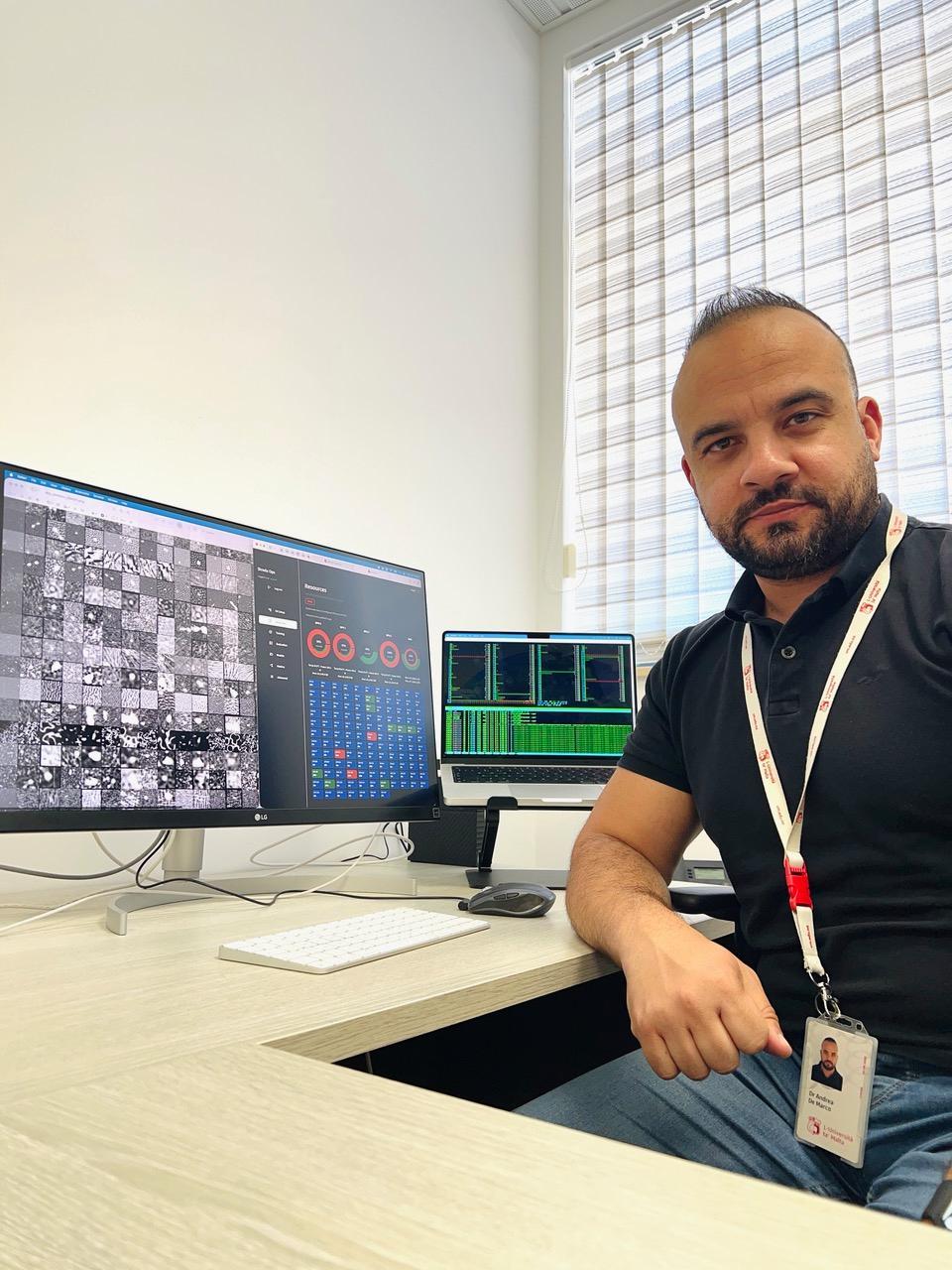
Image: The Malta Independent
A foundation AI model developed at the University of Malta has achieved roughly a 14% improvement in classifying radio galaxy morphologies on the Radio Galaxy Zoo dataset, a performance gain that principal investigator Dr Andrea DeMarco describes as "huge" in a field where advances of 1 to 2% are considered meaningful. The model, called Strada, was trained on approximately 600,000 raw radio images using self-supervised learning and is now open source on Hugging Face, already being downloaded by researchers.
The paper has been submitted to Astronomy and Computing and awaits peer review. The practical urgency behind Strada lies in the scale of data next-generation radio telescopes will generate. The Square Kilometre Array, built across South Africa and Australia with hundreds of thousands of dishes and antennas, sits in remote locations chosen partly to avoid interference from mobile phones and Wi-Fi.
It observes the sky continuously, 24/7. "The advantage is that you're looking at the sky in a completely different spectrum and you do not depend on day or night," DeMarco said. No human team can review data at that rate.
"There's no one human person, or even a team, that can look at all this stuff. At the very least, you need computation. But that is not enough in its own right, you need intelligent computation. This is where the AI aspect comes in."
Strada sits inside automated astronomy data pipelines, performing initial triage of incoming images before scientists review them. It flags material worthy of attention and filters out routine observations. DeMarco put the alternative plainly: "Why give 10 million images to an astronomer to find that one image?"
The cost of incomplete coverage is real: "If you don't see all the data, then you might have missed out on something big." The model's two training techniques required no manual image labelling. In one, the model is shown a partially obscured radio image and asked to reconstruct the missing sections.
In another, it is shown different altered versions of the same galaxy and trained to recognise them as the same object, what DeMarco calls "identity under pressure." DeMarco and the team spent approximately one year running and optimising the final model on GPUs and high-performance computing resources. "This took a good year of research, running, number crunching, all of this, to get the final model, the most optimised one."
Strada is a collaboration between the University of Malta and the Osservatorio Astrofisico di Catania, part of Italy's National Institute for Astrophysics. The team includes Dr Ian Fenech Conti and Hayley Camilleri from the University of Malta, Dr Simone Riggi from INAF and Ardiana Bushi, now at the University of Edinburgh, who continues to collaborate.
Funding comes from Xjenza Malta under its Research Excellence programme. Three additional papers examining Strada's architecture and training data are being presented at the Machine Learning for Astrophysics conference in 2026. DeMarco has been invited to speak on AI in astronomy at the Spanish Advanced School of AI in Granada.
The team is developing Strada V2, which would generate synthetic radio images of underrepresented galaxy types, addressing training data gaps in the field. DeMarco is direct about the technology's trajectory. "There's nothing in theory that AI can do that a human cannot do. It is all about practicality: how fast can you do it, and when can you do it?"
On whether AI will become permanent in astronomy infrastructure, his answer is unambiguous: "It has to be there."
SOURCES
Related
Related articles

Dyslexia experts demand end to fail-twice rule
Dyslexia specialists are demanding an end to Malta's fail-twice university rule, arguing it unfairly penalises students with learning difficulties.
Read more
Malta third from bottom in EU research spending
Eurostat figures show Malta allocated €73.70 per person to research and development in 2025, placing it third from bottom in the EU.
Read more
Malta Resuscitation Council calls for compulsory CPR
Founded in 2004, the MRC is a voluntary organisation operating under the European Resuscitation Council.
Read more