
Momentum claims third-force status after win
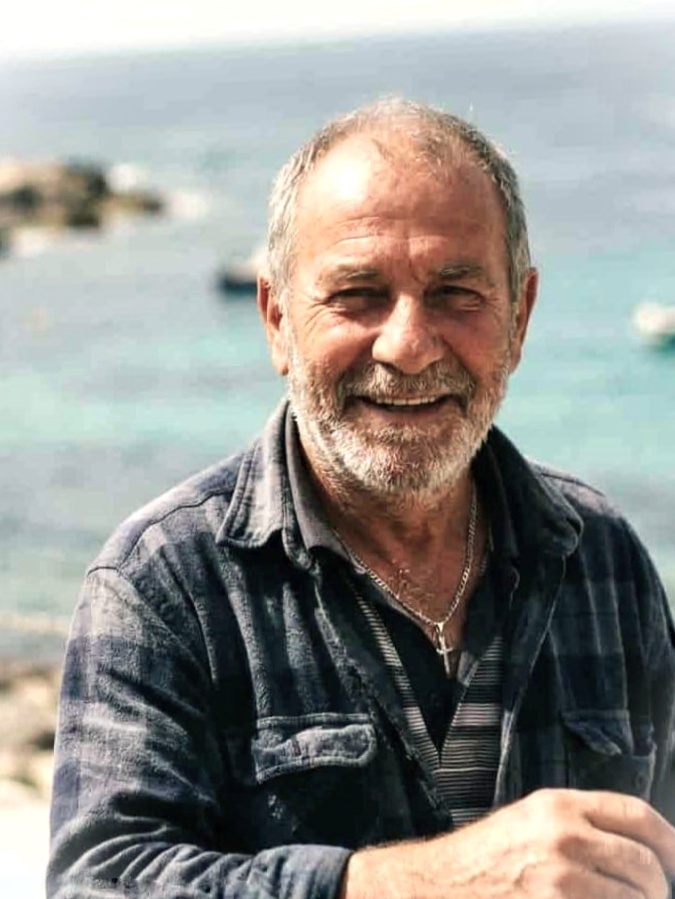
Momentum secured roughly 4,700 votes with seven candidates in its first general election and now claims the title of Malta's largest third political force.
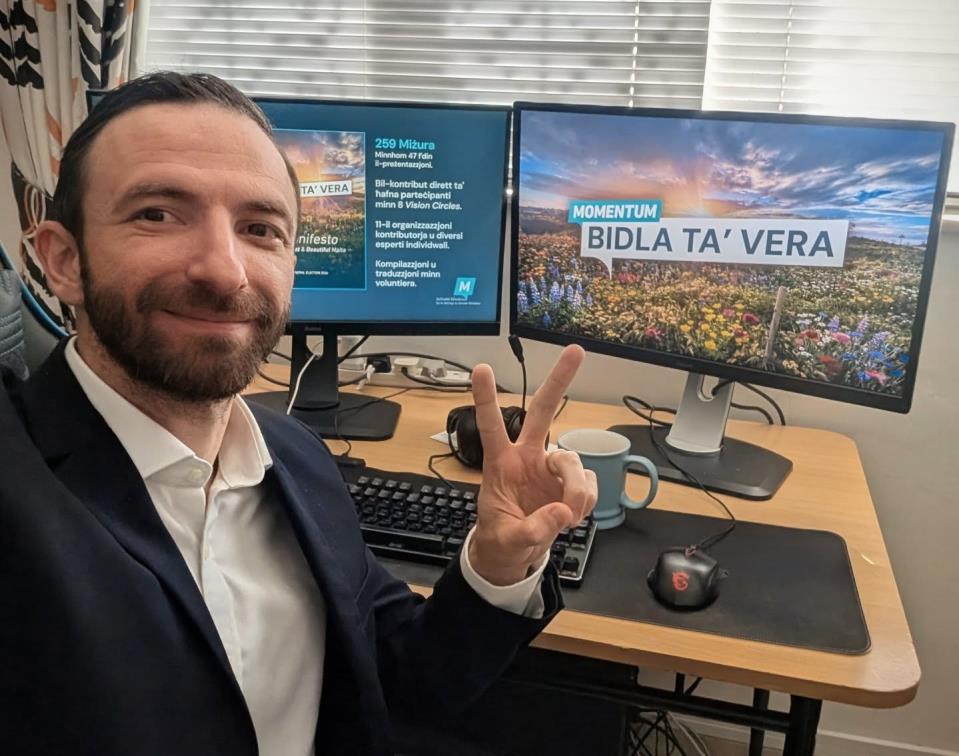
Image: The Malta Independent
Momentum contested its first general election with seven candidates, received approximately 4,700 votes according to secretary general Mark Camilleri Gambin and won no parliamentary seats. Camilleri Gambin called the outcome a milestone. "The excitement is real. We started as a new party just 15 months ago and in one year we became the largest third party. For us, that is an achievement," he said.
Camilleri Gambin attributed the vote total to organised effort rather than name recognition or protest sentiment. "These are new votes that we earned. You do not get those votes by doing nothing. You get them by working hard and by being visible," he said.
He pointed to approximately 50,000 abstentions – also his own figure – as evidence of an untapped constituency for alternatives to Labour and the Nationalist Party. Camilleri Gambin contested in the third district, where his results were broadly comparable to those recorded in the 11th District. Six of Momentum's seven candidates were new to electoral politics.
The exception was Arnold Cassola, a veteran of third-party contests in Malta. The party entered the campaign with a 259-point manifesto that included costed transport proposals designed to deliver measurable service improvements. "We were critical where necessary, but we also offered solutions," Camilleri Gambin said. "The detail mattered."
Momentum ran no female candidates. Camilleri Gambin said several women who had considered standing withdrew for personal and professional reasons.
"It definitely affected us. There are still barriers that make it harder for women to contest elections, especially within smaller parties," he said. He argued that Malta's gender corrective mechanism applies only to parties that already hold parliamentary representation, which he said places newer entrants at a structural disadvantage.
Momentum remains open to legal action on aspects of the electoral system and has not ruled out cooperating with ADPD on that front. The two parties maintained a positive working relationship during the campaign. Camilleri Gambin's post-election agenda focuses on building institutional depth.
Momentum plans to strengthen internal structures, expand its volunteer base, develop a youth arm and establish a think tank. He cited a recent volunteer information meeting that drew more attendees than the venue could comfortably hold as evidence of continued engagement. His five-year objective is to elect two or three Momentum candidates to Parliament.
"It is difficult, but I believe we can do it," he said. He identified European Parliament elections as a more accessible arena for smaller parties, where proportional dynamics are more favourable. On the broader campaign, Camilleri Gambin argued that neither Labour nor the Nationalist Party gave adequate weight to governance and corruption.
"There are politicians who say they want fairness, but when they see something that is clearly unfair, they remain silent," he said. On structural obstacles facing any party outside the two dominant blocs, he was direct: "We will not slow down just because the system is against us."
SOURCES
Related
Related articles

Malta third from bottom in EU research spending
Eurostat figures show Malta allocated €73.70 per person to research and development in 2025, placing it third from bottom in the EU.
Read more
Malta Resuscitation Council calls for compulsory CPR
Founded in 2004, the MRC is a voluntary organisation operating under the European Resuscitation Council.
Read more
MFSA sets out administrative penalties methodology
Where profits gained or losses avoided can be reliably quantified, those amounts may also be factored directly into the penalty calculation.
Read more